
Romanus, the boy whom I am teaching how to cook, mentioned with great difficulty that he sometimes does not know what certain ingredients are called. Although he has been cooking some very simple dishes with those ingredients, he has been doing so without really knowing their names. So for the benefit of my dear Romanus and others, here are four very common ingredients.
Caroenum: Boiled must (you have to boil the new wine or grape juice until it is only half the amount you started with).
Defritum: Either thick fig syrup, or must that's boiled until you have only a third of the amount with which you started.
Liquamen: a salty fish sauce. Most of the time you can replace it by salt.
Passum: Very sweet wine sauce, made by boiling the must (new wine or grape juice) to thicken it.
Better late than never.
Monday
Desserts
The mistress, who recently became pregnant, had a pretty powerful, scary sugar/nut craving today, so I set out to make some desserts.
Here is my own recipe: DULCIA DOMESTICA
Take the stones out of the dates and fill them with nuts or stone-pine kernels. Sprinkle a bit of salt on the filled dates and stew them in honey or honey-sweetened red wine. The dates have to be cooked in on low heat until their paring starts to come off (approximately 5-10 minutes).
I usually fill some of the dates with pepper because that is the way the mistress likes, but judging from her voracious desire for sweetness, I filled the dates with nuts and honey this time.
Amazingly, after finishing more than 50 dates, the mistress still wanted more sweet food. I obliged.
ALITER DULCIA
Mesh pepper, pine kernels, honey, rue, and Passum with milk and eggs, and boil the dough. Serve topped with honey and sprinkle with pepper.
Once again, I used very little pepper and substituted honey instead. I need to remember to buy more honey tomorrow for I have used almost all the honey in the kitchen.
Here is my own recipe: DULCIA DOMESTICA
Take the stones out of the dates and fill them with nuts or stone-pine kernels. Sprinkle a bit of salt on the filled dates and stew them in honey or honey-sweetened red wine. The dates have to be cooked in on low heat until their paring starts to come off (approximately 5-10 minutes).
I usually fill some of the dates with pepper because that is the way the mistress likes, but judging from her voracious desire for sweetness, I filled the dates with nuts and honey this time.
Amazingly, after finishing more than 50 dates, the mistress still wanted more sweet food. I obliged.
ALITER DULCIA
Mesh pepper, pine kernels, honey, rue, and Passum with milk and eggs, and boil the dough. Serve topped with honey and sprinkle with pepper.
Once again, I used very little pepper and substituted honey instead. I need to remember to buy more honey tomorrow for I have used almost all the honey in the kitchen.

Boiled Eggs
The pine-nut sauce keeps this gustum interesting. I send out eggs when I know that my main dish will take a while to cook, as they help to stave off the guests' hunger for just long enough.
Sauce: Pepper and soaked pine nuts. Add honey and vinegar and mix with garum.
Eggs are a favorite gustum in the house, and only second to dormice. They are such a central food. Horace's quite brilliant phrase, "From the egg to the apples," sums up the perfect typical Roman meal. I laughed quite a bit when I first heard the phrase from snatches of dinner conversation.
Sauce: Pepper and soaked pine nuts. Add honey and vinegar and mix with garum.
Eggs are a favorite gustum in the house, and only second to dormice. They are such a central food. Horace's quite brilliant phrase, "From the egg to the apples," sums up the perfect typical Roman meal. I laughed quite a bit when I first heard the phrase from snatches of dinner conversation.
Mustacei
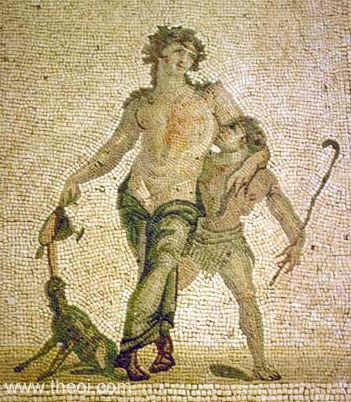 Oh, where would we be without wine? I'm sure men would have killed each other off long ago if not for the happiness the fine grape brings.
To make these rolls, I spare some of the sweet must that is produced from pressing grapes. The rest of the must is carefully stored in dolium to make wine.
MUST ROLLS
Pour some must over flour, add anise, cumin seeds, the lard, and cheese. Work it together until you have a reasonable dough. Form rolls, then put one bay leaf under each of them. Bake.
This recipe comes from the good Cato, yet another man who understood the importance of learning the ways of the farmer. He came before Columella, for I remember the man giving credit to Cato in many parts of his work.
Roasted Dormice
 I do not think I could possibly find a sweeter and more endearing animal than the dormouse. It is quite undeserving of the Romans' tendency to consume it in vast quantities.
The Stoic Seneca was right to criticize the practice of eating flamingo tongues - I dare not say this to my master, who constantly and heartily ridiculed this particular opinion of the man in front of everyone, including the slaves - but I wonder why he did not have more to say about the deaths of these poor little things.
The children of the family have a lot of fun feeding and playing with the mice as they fatten up. The creatures become fattened to bursting, and especially docile, when they are transferred to the perforated jars specifically designed for such a purpose.
Most of the slaves and I do not have the heart to inform the children that the dear animals they coo to are destined for the oven.
It is probably why they munch so happily on the finished dish when I have it brought to the table.
DORMOUSE
Pound dormouse meat with pepper. Place in an earthenware bowl with caraway, cumin, bay leaves, dates, honey, vinegar, wine, liquamen, and olive oil. Roast in the oven.
Sunday
Ova Sfongia with Milk and Honey Melons
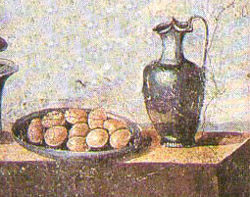
OVA SFONGIA
Mix eggs, milk and oil. Fry in a pan and serve topped with honey and a little pepper.
I can also make a tiropatinam, which uses the same ingredients but is more like a custard, if the family prefers something lighter.
HONEY MELONS
Cook diced melons in a pan together with spices and herbs until done. Sometimes silphium is added.
It has become more and more difficult to procure silphium. I have taken to using bits of our precious stores and combining them with leek. I've recently heard of asafoetida, which is very bitter-smelling but becomes quite similar to silphium when cooked.
The combination of fruit with more savory herbs is an interesting one that is often repeated in Apicius' book. I would personally never have thought to mix the two, but the result is often a quite tasty blend of salt complimenting the sweet. Many cooks have also taken to mixing garum and honey, myself included, to replicate the effect.
A typical day

I'll take a brief break from the recipes, but I cannot describe my daily life for long without involving food in some way.
So what exactly do I do all day?
When I was first assigned to the kitchen, I was almost constantly busy. I was in charge of gathering and preparing raw ingredients, making sauces, cleaning meat and fish, and cleaning pots, pans, dishes, and the general kitchen area.
I've since proved my worth and am now allowed to delegate busywork to other kitchen slaves. I do still like to lend a helping hand in the work rather than just oversee, because I am held responsible for making sure it is done right. I also do not want the other slaves to see me as someone who has forgotten where he came from.
I must always rise early. Ientaculum must be ready before the family awakens. Fresh-baked bread is extremely important, as it is yet another mark of my master's status. His children have no need to walk further than their table to enjoy a mouthful of warm bread. I also see to it that fresh eggs, fruit, and cheese, along with milk and honey, are set out with the bread.
Prandium is composed of similar stuff. I am usually able to serve more warm bread from the oven, along with fruit, nuts, and olives.
The cena is the meal I often need to prepare for all day, for I must prepare the gustum, a hearty mensa prima, and the sweet mensa secunda. Fried or roasted dormice are a favorite gustum in the family. When we have important guests, I must pull out all stops and do whatever the mistress orders. She will usually call for a good roast ostrich or peacock, a magnificent roast boar, or maybe a large selection of fish and shellfish to serve as the caput cenae. When the family is dining without guests, I will make regular favorites like fried veal or a small fish dish. To finish off the meal, I often send out cooked fruit and ova sfongia dressed in plenty of passum that matches the taste of the fine wine that my master has chosen.
That's just the cooking part.
Sometimes I will have the chance to go to the forum, if I so choose, unless I opt to send another slave with a list. I will usually go along to help choose which things look freshest and tastiest, as I have quite a bit of experience. The marketplace is quite chaotic, but fortunately many sellers already recognize our master's name and will have the finest wares set aside for us when we arrive.
At the end of the day, I retire to my own quarters. I have one of the nicest slave rooms in the house, due to my important position as cook. I could almost say that I am the most important slave in the entire household, since my master's grand feasts have become widely renowned. Now every feast he holds must inspire respect and awe in his guests without fail, lest he lose his social standing.
I am proud to serve at my master's great house, and I feel as though I am truly a part of it. He praises and rewards me for my cooking. However, I obviously do not want this to be my life forever. I would give up the security of my position as a slave in an instant for the risks of being a solitary freeman. But I feel that the day will come soon, and my master and I will part amicably. I am currently training one of the younger kitchen slaves in hopes that he can take my place when I am gone.
Subscribe to:
Posts (Atom)